A step-by-step guide with Arabic recitations, meaning, regular Sunnah prayers and source links.
Authentic Hadith
Learn the prayer from the Prophet’s example
صَلُّوا كَمَا رَأَيْتُمُونِي أُصَلِّي
The Prophet ﷺ instructed the Muslims to pray in the way they had seen him pray. This guide therefore follows authenticated descriptions of the prayer and links the evidence used for key actions.
Reference: Sahih al-Bukhari 631
Rak‘ahs
Obligatory and regular Sunnah prayers
Prayer
Sunnah before
Obligatory
Sunnah after
Source / note
Fajr
2
2
0
2 Sunnah before, then 2 obligatory rak‘ahs.
Reference: Sahih Muslim 725a; Jami‘ at-Tirmidhi 415
Dhuhr
4
4
2
A well-attested rawatib pattern is 4 Sunnah before and 2 after the 4 obligatory rak‘ahs. Other authenticated reports mention 2 before Dhuhr as well.
Reference: Jami‘ at-Tirmidhi 415; Sahih al-Bukhari 715
Asr
4
4
0
4 obligatory rak‘ahs. A voluntary prayer before Asr is reported in other narrations, but it is not part of the 12-rak‘ah rawatib set shown here.
Reference: Resident prayer count: Sahih al-Bukhari 543; additional pre-Asr prayer has separate evidence
Maghrib
0
3
2
3 obligatory rak‘ahs followed by 2 Sunnah rawatib.
Reference: Sahih al-Bukhari 543; Jami‘ at-Tirmidhi 415
Isha
0
4
2
4 obligatory rak‘ahs followed by 2 Sunnah rawatib. Witr is a separate night prayer and its legal classification differs by school.
Reference: Sahih al-Bukhari 543; Jami‘ at-Tirmidhi 415
The table shows the five daily obligatory prayers for a resident and the principal rawatib pattern. It does not list every reported voluntary prayer before or after the obligatory prayers.
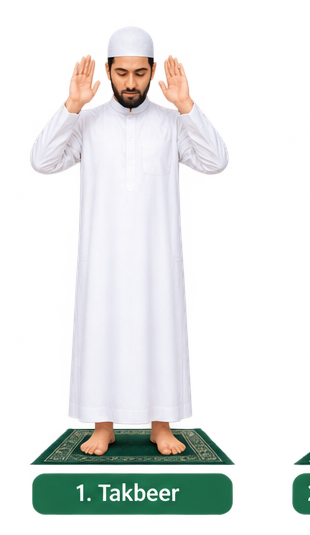
1. Begin the prayer — Takbir
Face the Qibla. Stand if you are able. Begin the prayer by saying “Allāhu akbar”. Raise the hands in the established manner. Keep the movement calm and deliberate.
اللَّهُ أَكْبَرُ
Allāhu akbar.
Reference: Sahih al-Bukhari 793
2. Opening supplication
Sunnah / optional
After the opening takbir, an opening supplication may be recited. This is a Sunnah supplication, not a replacement for Al-Fatihah.
Aʿūdhu billāhi mina sh-shayṭāni r-rajīm.
Bismillāhi r-raḥmāni r-raḥīm.
Reference: Qur’an 16:98; opening recitation practice
4. Recite Al-Fatihah
Recite Surah Al-Fatihah in the prayer. The detailed ruling for a follower praying behind an imam differs between schools of Islamic law, so the site should not present one school’s detail as universal.
In the first two rak‘ahs, recite another surah or Qur’anic passage after Al-Fatihah. Al-Ikhlas is shown only as an example; it is not required in every prayer.
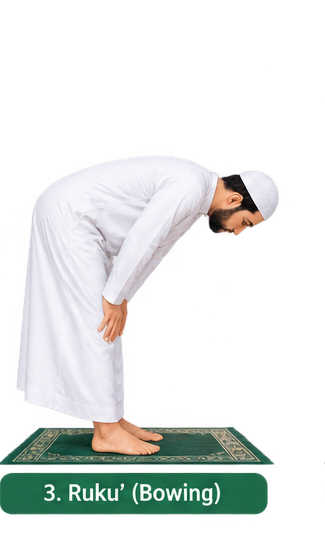
Say the takbir and bow. Remain in ruku‘ with calmness until you are settled. Say “Subḥāna rabbiyal-ʿaẓīm”.
اللَّهُ أَكْبَرُ
سُبْحَانَ رَبِّيَ الْعَظِيمِ
Allāhu akbar.
Subḥāna rabbiyal-ʿaẓīm.
Reference: Sahih al-Bukhari 793; Sunan Abi Dawud 871
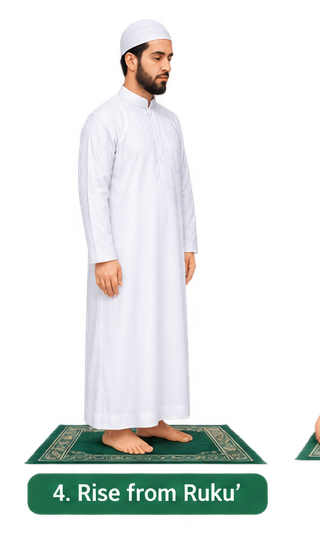
7. Rise from ruku‘
Rise until you are standing upright and settled. The imam or one praying alone says “Samiʿa Allāhu liman ḥamidah”; then praise Allah with “Rabbanā wa laka l-ḥamd”.
Samiʿa Allāhu liman ḥamidah.
Rabbanā wa laka l-ḥamd.
Reference: Sahih al-Bukhari / Muslim — raising from ruku‘
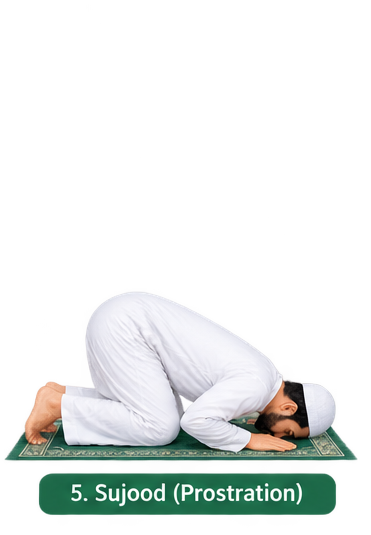
8. First prostration — Sujud
Say the takbir and prostrate with calmness. The hadith specifies prostration on seven body parts: the forehead with the nose, both hands, both knees and the toes of both feet. Say “Subḥāna rabbiyal-aʿlā”.
اللَّهُ أَكْبَرُ
سُبْحَانَ رَبِّيَ الْأَعْلَى
Allāhu akbar.
Subḥāna rabbiyal-aʿlā.
Reference: Sahih al-Bukhari 812; Sunan Abi Dawud 871
9. Sit between the two prostrations
Rise from prostration and sit calmly until you are settled. One authenticated supplication is: “My Lord, forgive me; my Lord, forgive me.”
رَبِّ اغْفِرْ لِي، رَبِّ اغْفِرْ لِي
Rabbi-ghfir lī, Rabbi-ghfir lī.
Reference: Sunan Ibn Majah 897 — graded Sahih
10. Second prostration
Perform the second prostration with the same calmness. This completes one rak‘ah. Then stand for the next rak‘ah when the prayer continues.
اللَّهُ أَكْبَرُ
سُبْحَانَ رَبِّيَ الْأَعْلَى
Allāhu akbar.
Subḥāna rabbiyal-aʿlā.
Reference: Sahih al-Bukhari 793; Sunan Abi Dawud 871
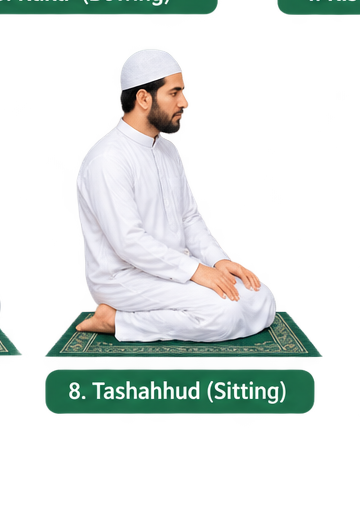
11. Tashahhud
After two rak‘ahs, sit for the tashahhud. In the final sitting, recite the tashahhud before completing the prayer.
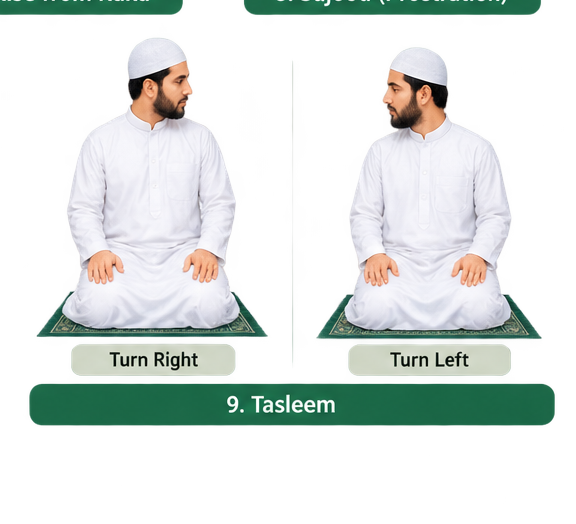
Complete the prayer with taslim. Turn the head to the right and then to the left in the established manner, saying the greeting of peace.
السَّلَامُ عَلَيْكُمْ وَرَحْمَةُ اللَّهِ
As-salāmu ʿalaykum wa raḥmatullāh.
Reference: Sahih al-Bukhari 837; Bukhari 401
Obligatory elements
Core obligatory elements of the prayer
Common Sunni core elements include: intention; the opening takbir; standing in an obligatory prayer when able; Qur’anic recitation including Al-Fatihah according to the applicable school’s ruling; ruku‘; rising and standing upright after ruku‘; two prostrations; sitting between the two prostrations; calmness in the postures; maintaining the required order; the final sitting and completion of the prayer with taslim. Details of classification and some follower/imam rules differ between the Hanafi, Maliki, Shafi‘i and Hanbali schools. This page therefore marks the common core and does not label every disputed detail as universally obligatory.
Reference: Sahih al-Bukhari 793 — calmness and sequence
Reference: Sahih al-Bukhari 756 — Al-Fatihah
Reference: Sahih al-Bukhari 812 — seven points of prostration
Reference: Sahih al-Bukhari 1117 — standing when able
Methodology note: the detailed classification of farḍ, wājib, rukn and Sunnah differs between schools of Islamic law. This guide presents the common core with evidence; it does not replace learning the detailed rulings of a particular madhhab.